Vacuum · Solves gas porosity
Gas porosity is trapped air: the shot rams metal into a cavity that never had a chance to empty. Our vacuum systems evacuate the shot sleeve and mold ahead of the metal — so there's nothing left to trap.
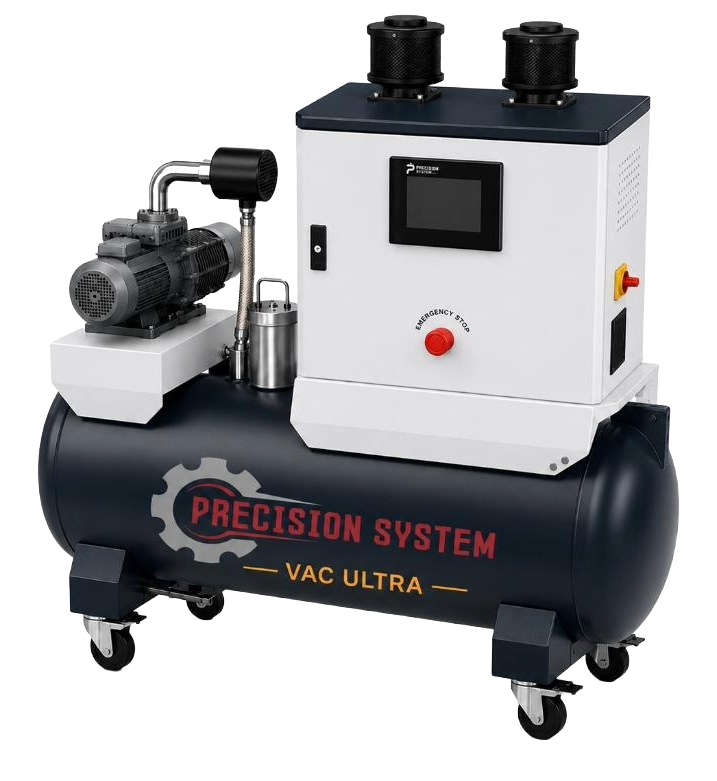
Efficiency and flexibility make VAC ULTRA a uniquely acceptable vacuum system: two-stage evacuation from shot sleeve and mold, minimizing gas porosity. Serves the purpose — and saves you tons of money.
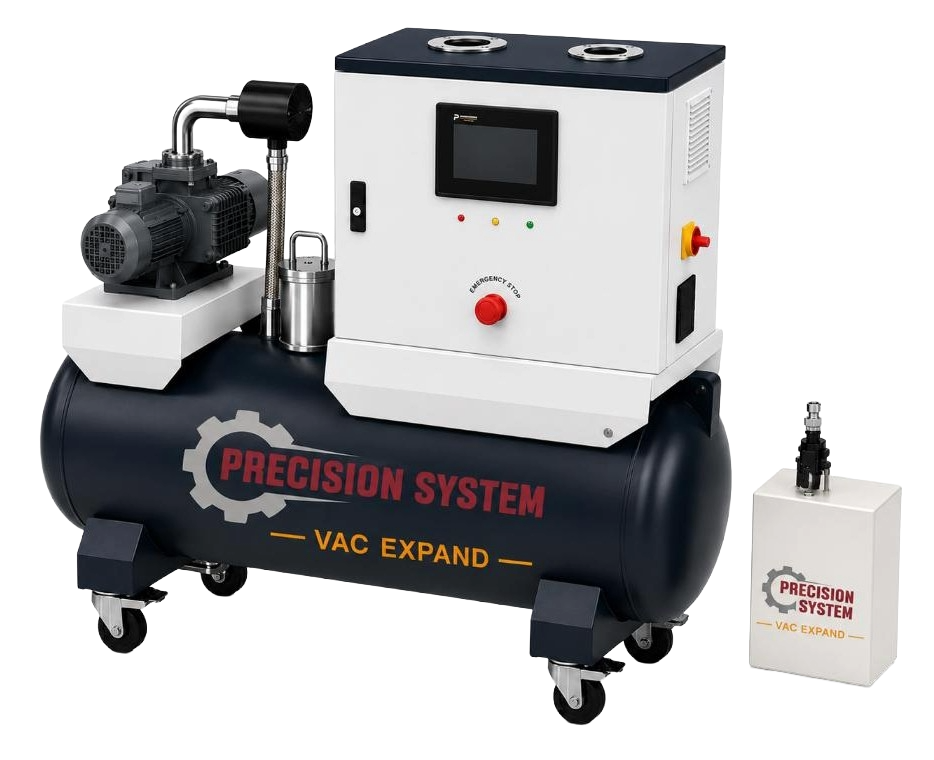
An extension unit mounted close to the mold: shorter actuation time, better vacuum efficiency. The vacuum solution for high-tonnage casting.
How it works
Stage one evacuates the shot sleeve as the plunger closes the pour hole. Stage two pulls the mold cavity down through the vacuum line — timed so the melt fills a near-empty die.
Key specifications
| Specification | VAC ULTRA | VAC EXPAND |
|---|---|---|
| Vacuum tank sizes | 250 · 300 · 500 · 800 · 1000 L | 300 · 500 · 800 · 1000 L |
| Evacuation | Two-stage: shot sleeve + mold | Extension unit, mounted near mold |
| Extensions | — | Up to 4 units per system |
| Best for | Standard to large HPDC machines | High-tonnage & mega castings |
Detailed spec sheet (channels, evacuation sections, footprint, tonnage mapping) available on request — ask our engineers.
Where vacuum matters most
Venting alone can't empty a cavity in the milliseconds a shot allows. Vacuum actively evacuates it — which is why leak-tested and safety-critical castings specify it.
Related
Let’s cut your scrap rate
Send whatever you have — a drawing, a photo, a rejection report. An engineer, not a sales script, will come back to you with what we'd actually do.